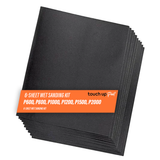
Choose the abrasive for the surface and the next coating stage. The right grit for shaping filler is very different from the one used to refine cured lacquer, and a tiny chip is not a reason to sand a wide patch of good paint.
What the grit number tells you
Within the same grading system, a lower number indicates a coarser abrasive and a higher number a finer one. Check the marking on the sheet: a P-grade identifies the FEPA system. Backing, abrasive type, wet or dry use and whether you work by hand or machine also change the result.
Example grades
Role you may see in a repair process
Caution
P80–P180
Coarse shaping and removal in suitable bodywork or filler processes
Not a starting point for polishing a small surface scratch.
P240–P600
Intermediate preparation and primer-refinement stages in specified systems
The next coating’s technical instructions must set the final grade.
P800–P2000
Finer preparation or refinement in appropriate processes
These grades are not interchangeable, and an unsuitable method can cut through lacquer.
P3000 and finer
Fine refinement in some professional finishing systems
Still abrasive: not proof that sanding an unknown finish is safe.
These are examples of grade roles, not a universal sequence or a specification for the products in your basket. 3M’s process guidance also stresses using the paint company’s recommended grade and removing earlier sanding scratches before coating.
Does this repair need sanding at all?
Transferred paint: clean and assess before sanding; the material may sit on top of the finish.
A fine clear-coat mark: a suitable small polish test may be the better first step.
A clean isolated chip: avoid broad sanding of the surrounding sound coating just to add a little colour.
Loose edges, filler, rust or a spray repair: follow a substrate- and coating-specific preparation method.
Matt or satin paint: seek the appropriate repair method; ordinary sanding and polishing can alter the sheen.
Wet sanding versus dry sanding
Use water only with abrasives and a repair process designed for wet sanding. Keep residue and contaminated water out of seams and exposed materials. Some fillers, substrates and coating stages need a dry method; do not assume water is always gentler.
For dry work, use the dust control and protection required by the materials. Keep abrasives clean and replace clogged or damaged sheets rather than pressing harder. An abrasive block controls a flat area differently from fingertips, which can produce uneven pressure.
Keep preparation controlled
Clean before sanding so wax, grease or grit is not worked into the surface.
Identify the substrate, coating condition and the technical preparation required by the next product.
Protect edges, creases, trim and surrounding sound paint. These are easy places to remove too much material.
Use the specified grade and method with controlled pressure. Inspect the surface repeatedly rather than sanding for a fixed length of time.
Remove the previous grade’s scratches as the process directs; jumping straight to a very fine grade may leave deeper marks behind.
Remove residue, clean as required and inspect before primer or colour. If a new layer is exposed unexpectedly, stop and reassess.
Choose materials by their actual specification
Check the individual grades and intended use of fine wet and dry sandpaper before buying. A pack called “fine” does not specify every stage of a repair. A sanding block also does not necessarily include abrasive sheets.
For an uncertain repair, send the paint team the exposed material, a photograph and the exact coating products you intend to use. The answer should be a preparation method for that system, not simply a random grit number.
Updated 8 November 2026. Follow the instructions supplied with each product; coating systems and drying conditions vary.
Loading...
Selected customer testimonials
Selected positive feedback from customers of our XtremeAuto and WLW Autoparts eBay paint listings. Each comment relates to the product shown. Follow the source links to read the full range of feedback.
Xtremeauto Electric Blue Pearl heat-resistant aerosol
“I got this paint for my car brake caliper and it cover very well”
mrprawn3 · 5 March 2020 WLW Autoparts / wlw_autoparts · Verified purchase on eBay
The original review includes three customer photographs of an Electric Blue Pearl caliper finish. Published in March 2020; this is a finished-result example, with no before photograph.
30ml touch-up bottle mixed by registration
“very good colour match, nicely packaged to protect”
5***d · eBay: past 6 months when checked XtremeAuto / xtremeautos · Verified purchase on eBay
These are selected customer testimonials, not an overall product score. Quotes are short excerpts of the original feedback. Seller feedback is not converted into a product star rating. We do not offer rewards for positive testimonials through this page. Any known incentivised content must be clearly labelled. Use the original links to see other experiences and the product details at the time of review.
If you believe a displayed testimonial is inaccurate, incentivised without disclosure, or attached to the wrong product, contact our team with its source link. We check the original feedback and correct or remove misleading content.